Peak Performance: A Technical Masterclass in Roblox RIVALS

Peak Performance: A Technical Masterclass in Roblox RIVALS
Roblox RIVALS has emerged as the definitive 1v1 and small-team arena shooter on the platform, discarding the bloat of traditional battle royales in favor of raw, twitch-based mechanical skill. Developed by Nosniy Games, it operates on a philosophy of "perfect information"—where maps are symmetrical, loadouts are balanced, and the only variable is the player's ability to manipulate the game’s physics and ballistic systems. To ascend the ranked ladder and reach the "Eternal" tier, a player must move beyond simple point-and-click aim. You must master the frame-data of movement cancels, the pixel-perfect geometry of projectile arcs, and the psychological conditioning required to manipulate an opponent's movement. This guide serves as an exhaustive technical manual for those looking to dominate the arena through mechanical and tactical supremacy.
1. How to Calibrate Your Mechanical Foundation: Sensitivity and Frame Optimization
Before the first round begins, your success is dictated by your technical setup. RIVALS is a high-velocity shooter where a 180-degree turn must be instantaneous yet precise. Unlike tactical shooters like Valorant, RIVALS requires a higher "Effective Dots Per Inch" (eDPI) to account for verticality and rapid tracking. You should calibrate your sensitivity so that one full comfortable swipe across your mousepad results in exactly a 360-degree rotation. This ensures that your muscle memory has a consistent physical anchor for every flick shot.
Furthermore, frame rate is directly tied to input latency. In RIVALS, the "Click-to-Photon" delay can be the difference between a trade and a win. You must disable "Global Shadows" and "Ambient Occlusion" in the Roblox settings to ensure your FPS remains capped at your monitor's highest refresh rate. A stable 144Hz or 240Hz output reduces the "ghosting" of enemy character models during high-speed slides, allowing for cleaner tracking of the head hitbox, which in RIVALS, features a significantly higher damage multiplier than the torso.
2. How to Master Kinetic Movement: The Art of the Slide-Jump and Air-Strafing
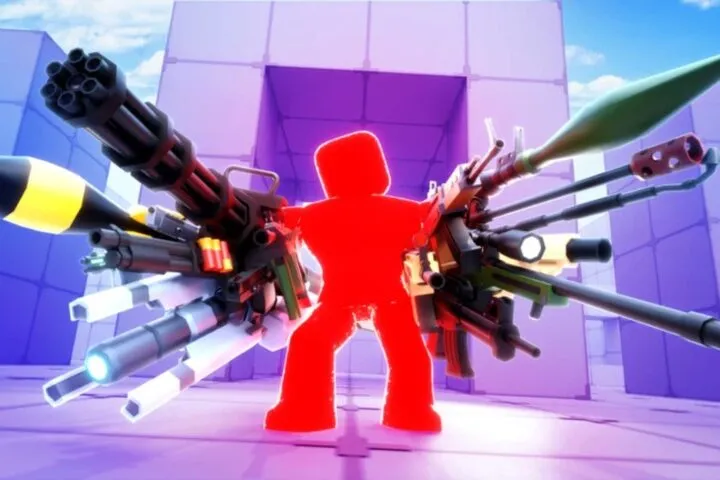
Movement in RIVALS is not merely a way to get from point A to point B; it is your primary defensive layer. The "Slide" mechanic is the core of the game’s mobility. By initiating a slide and immediately jumping at the peak of the momentum (the "Slide-Jump"), you preserve your kinetic energy and increase your character's velocity by approximately 15%. This makes you a harder target to track and allows you to clear gaps that stationary players cannot.
To achieve professional-level movement, you must master "Air-Strafing." RIVALS allows for a degree of mid-air directional control. By letting go of the forward key (W) while in the air and using your strafe keys (A or D) in conjunction with smooth mouse movements, you can curve your jump trajectory. This is vital for "Corner Peeking"—where you jump around a corner in an arc, allowing you to see the opponent while maintaining a high velocity that breaks their aim-assist or manual tracking.
3. How to Execute the Perfect Loadout Strategy: Balancing Burst and Sustain
The loadout system in RIVALS is deceptively deep, revolving around a primary, secondary, and utility slot. To master the meta, you must understand the "Engagement Range Theory." If you are playing on a compact map like "Container," your primary should be the Shotgun or the SMG. However, the technical secret lies in the "Quick-Switch" technique. By firing a Shotgun blast and immediately swapping to your Pistol to finish the remaining HP, you bypass the fire-rate cap of the shotgun, effectively reducing your "Time-to-Kill" (TTK) by nearly 30%.
Recommended Tactical Archetypes
- The Duelist: Sniper Rifle + Revolver + Medkit. This kit relies on "First-Shot Priority." If you land a body shot with the Sniper, the Revolver provides a hitscan finish.
- The Aggressor: SMG + Shotgun + Frag Grenade. This is a "Pressure" build designed to force the opponent into making mistakes through constant movement and explosive area denial.
- The Specialist: Assault Rifle + Pistol + Shield. This focuses on mid-range dominance, using the Shield to win trades in open areas where cover is sparse.
4. How to Manipulate Projectile Physics: Leading Shots with the Sniper and Bow
RIVALS utilizes a hybrid ballistics system. While the Pistol and AR are hitscan (the bullet hits instantly where you click), the Sniper and Bow have physical projectiles with travel time and gravity. To become a master marksman, you must internalize the "Leading Distance" relative to your opponent's velocity. If an opponent is slide-jumping across your screen, you must aim approximately 2-3 character widths ahead of their current position, depending on the range.
The Bow, in particular, requires an understanding of "Arc Geometry." Unlike the Sniper, which has minimal drop, the Bow’s arrow follows a parabolic path. At long distances, you must aim above the opponent's head to compensate for gravity. The technical advantage of the Bow is its silent nature and lack of a "scope glint," allowing you to hold angles without alerting the opponent to your exact position until the arrow has already made contact.
5. How to Control the Map Geometry: Head-Glitches and Power Positions
Every map in RIVALS is designed with "Power Positions"—elevated areas or specific pieces of cover that provide a visual advantage. Mastering the "Head-Glitch" is essential. This involves positioning your character behind a waist-high obstacle so that only the very top of your head is visible to the enemy, while your camera (which is located at eye-level) can still see and fire over the cover. This minimizes your hittable surface area while maintaining 100% offensive capability.
Map Control Checklist
- High Ground Advantage: Verticality in RIVALS is a massive buff; shooting downward makes it easier to hit the head hitbox, while shooting upward often results in leg or torso shots.
- Health Pack Timing: Memorize the respawn timers of health packs. In a tight 1v1, kiting an enemy away from a health pack while you take it for yourself is a 100HP swing in your favor.
- Symmetry Utilization: Since maps are symmetrical, use your knowledge of your own spawn to predict exactly where the enemy will be at the 5-second mark of the round.
6. How to Optimize Utility Usage: Flashbangs, Grenades, and Heals
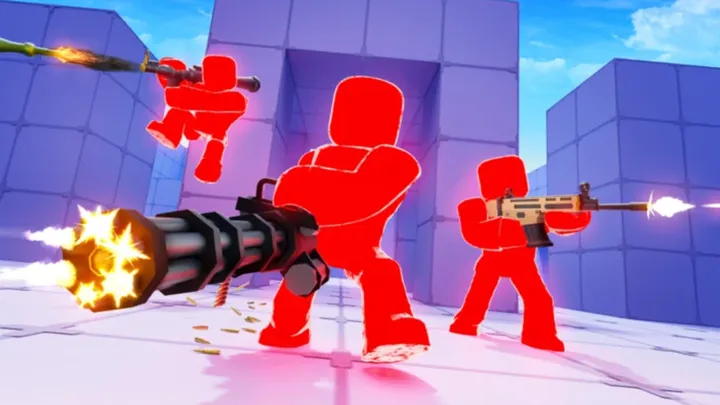
Utility is often the most neglected aspect of a novice player’s kit, yet it is the most consistent way to break a stalemate. The Frag Grenade in RIVALS has a "Cooking" mechanic. You should never throw a grenade immediately; hold it for 2 seconds before throwing so that it detonates the moment it reaches the enemy’s feet, giving them zero time to react or slide away. This is known as an "Airburst" and is the highest tier of explosive skill.
Flashbangs, conversely, should be used for "Entry Fragging." If you know an opponent is camping behind a corner with a Shotgun, a Flashbang thrown against the opposite wall will blind them even if they are tucked deep into cover. The "Sound-Queue" is your indicator; if the flash connects, you will hear a distinct high-pitched ringing sound, signaling that you have a 2-second window to push and secure the kill while they are visually impaired.
7. How to Win the Psychological War: Baiting and Conditioning
RIVALS is as much a game of the mind as it is of the hands. "Conditioning" is the act of training your opponent to expect one behavior and then doing the opposite. For example, if you slide-peek a corner three times in a row, your opponent will start pre-aiming the floor at the corner. On the fourth peek, you should "Wide-Jump"—jumping far past the corner while air-strafing. Their crosshair will be fixed on the ground where you should have been, giving you a free window to track their head while they struggle to adjust.
Psychological Tactics
- The "Fake" Reload: If you are behind cover and low on ammo, fire a single shot to bait the enemy into thinking you are empty and pushing you. Switch to your secondary and catch them while they are sprinting and unable to fire.
- Aggressive Kiting: If you are low on health, don't just run. Drop a grenade at your feet while you run away. Aggressive players will often blindly chase you into the explosion.
- Emote Taunting: Use emotes strategically. A quick emote after a kill can frustrate an opponent, causing them to play "tilted" and make aggressive, uncalculated mistakes in the next round.
8. How to Refine Your Aim: Tracking vs. Flicking Techniques
There are two primary styles of aiming in RIVALS: "Tracking" (keeping the crosshair on a moving target) and "Flicking" (moving the crosshair rapidly to a target). SMGs and ARs require high-level tracking. To improve this, you should practice "Smoothness Training" in aim trainers, focusing on following a target without jittery movements. In RIVALS, the character movement is very "floaty," meaning targets change direction less sharply than in other shooters, making smooth tracking more effective than constant micro-flicks.
Flicking is reserved for the Sniper, Revolver, and Shotgun. This requires "Spatial Awareness"—knowing where your crosshair is in relation to the center of your screen without looking at it. The "Center-Point" technique involves keeping your eyes fixed on the enemy and letting your hand naturally flick the crosshair to where your eyes are focused. High-level RIVALS players often use a tiny, high-contrast crosshair (like a cyan dot) to ensure it doesn't obscure the enemy model during these rapid movements.
9. How to Manage the Economy: Keys, Wraps, and Ranked Rewards
RIVALS features an economy system that rewards consistent play. While cosmetics like "Weapon Wraps" don't provide a statistical advantage, "Keys" and "Crates" are the primary way to unlock new weapon types and utilities that can shift your tactical options. You should prioritize completing "Daily Challenges" that reward Keys, as these allow you to expand your arsenal. Having a diverse selection of weapons allows you to counter-pick an opponent's playstyle in the mid-match loadout screen.
In Ranked play, your "Elo" is a reflection of your consistency. To climb efficiently, you must play "Percentage-Based RIVALS." This means taking fights only when you have an advantage (better health, better positioning, or utility available). If you find yourself on a losing streak, the "Mental Reset" is a technical requirement. Losing Elo causes a psychological "Tilt" that degrades your reaction time. Taking a 15-minute break resets your cortisol levels, allowing you to return to the arena with the mechanical precision required for Eternal-tier play.
10. How to Counter the Meta: Analyzing and Overcoming Top-Tier Strats
As you reach the higher echelons of RIVALS, you will encounter the "Meta"—the most effective tactics currently used by the player base. Currently, the meta revolves around high-mobility Sniper play. To counter this, you must master "Unpredictable Pathing." Do not run in straight lines or jump in predictable arcs. Use the environment to "LoS" (Line of Sight) the sniper, forcing them to come into close range where your SMG or Shotgun has the TTK advantage.
Counter-Meta Strategies
- Anti-Sniper: Use Shield utility and constant sliding to close the gap. Snipers struggle against targets that move vertically and horizontally simultaneously.
- Anti-Shotgun: Maintain a "Spacing Buffer." Use the Assault Rifle to chip away their health from 20 meters away. If they push, use your slide-jump to retreat while firing.
- Anti-Healer: If an opponent is using Medkits, you must play for "Burst Damage." Do not let them retreat behind cover. Use your Frag Grenade to flush them out of their healing spot and force the engagement.
Conclusion
Mastering Roblox RIVALS is a journey of refining the relationship between your physical inputs and the game's simulated environment. It is a game that rewards the student of the arena—those who understand that a slide-jump is not just a jump, and a grenade is not just an explosive, but tools in a complex mechanical dialogue. By optimizing your technical settings, mastering kinetic mobility, and employing advanced psychological conditioning, you transform the arena from a place of chance into a place of certainty. Whether you are dueling in a 1v1 or coordinating in a team match, the principles of projectile physics, map geometry, and loadout synergy remain the same. The arena waits for no one; step in, calibrate your aim, and prove that you are the ultimate rival.