




The Early Reveal That Sparked Interest In Burrowing
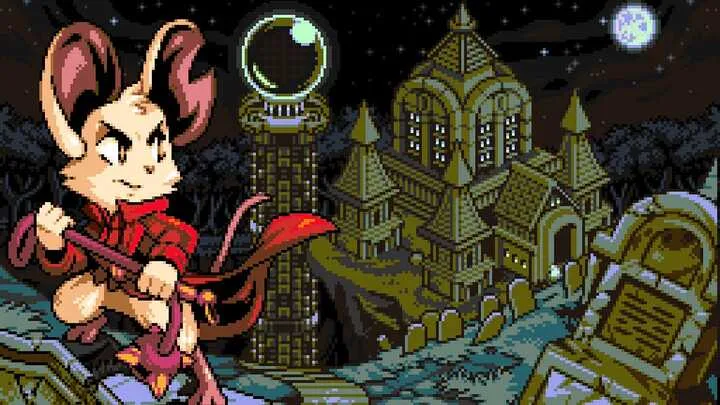
When Mina the Hollower was initially introduced, many players expected a nostalgic action adventure title inspired by handheld classics. Early footage certainly delivered that impression through retro visuals and fast paced combat.
However, viewers quickly noticed that Mina could dive beneath the ground and travel underground. At first glance, the feature appeared to be a simple traversal tool designed to differentiate the game from its inspirations.
As additional gameplay footage emerged, it became clear that burrowing was not merely a movement option. Developers showcased sequences where underground travel altered combat strategies, opened hidden routes, and changed how players approached encounters.
This revelation shifted community discussions away from visual nostalgia and toward gameplay innovation.
How Burrowing Became More Than A Movement Mechanic
Traditional action adventure games often separate exploration and combat into distinct systems. Mina the Hollower takes a different approach by connecting both through burrowing.
The mechanic allows players to instantly transition between vulnerable and protected states. While underground, Mina can avoid certain attacks, reposition strategically, and discover opportunities unavailable on the surface.
Several gameplay implications emerged from previews:
- Evading enemy projectiles
- Accessing hidden pathways
- Solving environmental puzzles
- Escaping dangerous situations
- Creating offensive openings
Because these functions overlap, the mechanic influences multiple gameplay layers simultaneously.
Rather than existing as an isolated feature, burrowing becomes a universal tool that players constantly consider.
The Impact On Combat Design
Combat discussions surrounding Mina the Hollower frequently return to burrowing because it fundamentally changes encounter design.
Many action games emphasize dodging through rolls, shields, or mobility abilities. Mina introduces an alternative concept by allowing players to temporarily disappear beneath the battlefield.
Enemy attacks therefore must account for vertical interaction. Instead of only challenging player movement across a horizontal plane, encounters must consider transitions above and below ground.
This creates unique combat scenarios where timing becomes more important than pure aggression.
Players may need to:
- Burrow under sweeping attacks
- Surface behind opponents
- Avoid area damage
- Create surprise counterattacks
- Manipulate enemy positioning
The result is a combat system that rewards adaptability and observation rather than button mashing.
How Enemy Design Is Built Around Burrowing
One of the most interesting developments revealed through gameplay demonstrations is how enemy behavior appears specifically designed around Mina's underground movement.
In many games, enemies react primarily to direct attacks and proximity. Mina's foes must also respond to a target that can temporarily vanish from sight.
This creates opportunities for more dynamic artificial intelligence patterns.
Certain enemies appear capable of:
- Tracking underground movement
- Predicting resurfacing locations
- Creating hazards beneath the surface
- Limiting safe burrowing zones
Such mechanics prevent burrowing from becoming an overpowered escape option.
Instead, players must continuously evaluate when and where underground movement remains effective.
The Role Of Burrowing In Exploration
Exploration is another area where burrowing has generated significant attention.
Modern players increasingly expect secrets, optional paths, and hidden collectibles. Mina the Hollower addresses these expectations through terrain interaction.
The underground mechanic transforms exploration from simple navigation into active discovery.
Players can investigate suspicious locations and uncover routes invisible from the surface.
Common exploration possibilities include:
- Secret treasure rooms
- Hidden shortcuts
- Optional challenge areas
- Alternate progression paths
- Environmental lore discoveries
This encourages curiosity and experimentation throughout the game world.
Every stretch of terrain potentially contains something worth investigating.
Environmental Storytelling Through Underground Spaces
An unexpected consequence of the burrowing mechanic is its contribution to environmental storytelling.
Many adventure games communicate lore through architecture, dialogue, and item descriptions. Mina expands this concept by hiding information beneath the surface itself.
Burrowing allows players to uncover forgotten locations that reveal historical details about the game's setting.
These discoveries can include:
- Ancient ruins
- Abandoned tunnels
- Buried artifacts
- Secret chambers
- Hidden symbols
Because players actively uncover these elements rather than encountering them naturally, the resulting discoveries feel more personal and rewarding.
The mechanic therefore supports both gameplay and narrative progression.
Puzzle Design And Underground Interaction
Puzzle solving has become another major discussion point among those following Mina the Hollower.
Traditional puzzles often rely on switches, keys, and environmental manipulation. Burrowing introduces additional complexity by changing how players interact with space itself.
Designers can create puzzles requiring:
- Precise underground navigation
- Timed resurfacing
- Hidden pathway discovery
- Hazard avoidance
- Multi layer environmental observation
These systems allow puzzles to feel distinct from those found in many retro inspired titles.
Instead of simply recreating classic formulas, Mina appears interested in evolving them through its core mechanic.
This design approach contributes significantly to the game's identity.
Why Players Compare Burrowing To Genre Defining Mechanics
Gaming history includes numerous examples of mechanics becoming synonymous with specific titles.
Examples often cited by players include:
- Hookshots in adventure games
- Portals in puzzle games
- Grappling systems in platformers
- Time manipulation mechanics
- Parkour movement systems
Increasingly, community discussions place Mina's burrowing mechanic into this category.
The comparison emerges because the feature influences nearly every major gameplay pillar.
A genre defining mechanic typically satisfies three criteria:
- It remains useful throughout the game
- It affects multiple gameplay systems
- It creates experiences unavailable elsewhere
Current impressions suggest Mina's underground movement successfully meets all three standards.
Community Reactions To Hands On Previews
Recent hands on reports have strengthened interest in the burrowing system.
Players consistently mention the mechanic when discussing their impressions of the game.
Several recurring themes appear in community feedback:
- The mechanic feels intuitive
- Combat becomes more engaging
- Exploration feels rewarding
- Encounters remain unpredictable
- The game develops its own identity
Notably, discussions rarely frame burrowing as a novelty.
Instead, players describe it as the foundation supporting the entire experience.
This distinction is important because many unique mechanics lose relevance after initial exposure. Mina's appears designed for long term engagement.
What Burrowing Means For The Future Of Mina The Hollower
As anticipation for Mina the Hollower continues to grow, the burrowing mechanic remains central to conversations about the game's future success.
If implemented consistently across the entire campaign, the feature could become the defining characteristic that separates the game from countless retro inspired releases.
Many indie projects successfully replicate visual styles and nostalgic aesthetics. Far fewer introduce mechanics capable of redefining player interaction with the game world.
The long term impact may extend beyond Mina itself.
Future developers could study the system as an example of how a single mechanic can unify combat, exploration, puzzles, progression, and storytelling into one cohesive design philosophy.
That possibility explains why industry observers continue paying close attention to its implementation.
Conclusion
While Mina the Hollower offers impressive pixel art, atmospheric world building, and exciting action gameplay, the burrowing mechanic has emerged as the feature attracting the greatest attention. What initially appeared to be a simple movement option has proven to be a sophisticated system influencing nearly every aspect of the game.
From combat encounters and enemy behavior to exploration, puzzles, and environmental storytelling, burrowing serves as the connective tissue binding the entire experience together. It creates unique opportunities for player expression while helping the game establish an identity beyond nostalgia.
As more information becomes available and players gain access to the full release, the success of Mina the Hollower will likely be judged not only by its combat or world design but by how effectively it realizes the enormous potential of its signature mechanic. If current impressions are any indication, burrowing may become one of the most memorable gameplay innovations in modern retro inspired action adventures.