.webp)






Few titles in the last decade have dominated the cultural zeitgeist quite like Elden Ring. FromSoftware’s magnum opus didn’t just move units; it fundamentally shifted the conversation around open-world design and player agency. However, beneath the glowing reviews and the Game of the Year trophies lies a fractured discourse that refuses to heal: the tension between FromSoftware’s uncompromising design philosophy and the massive, diverse audience the game attracted.
This isn't just another easy mode debate. It is an exploration of how a developer known for niche, punishing corridors attempted to translate that friction into a boundless horizon. As we peel back the layers of the Lands Between, we find a game caught in a beautiful, agonizing tug-of-war between being an elite challenge and a universal experience. The following analysis examines the evolution of this friction, the mechanics that define it, and the philosophical cost of conquering the Lands Between.
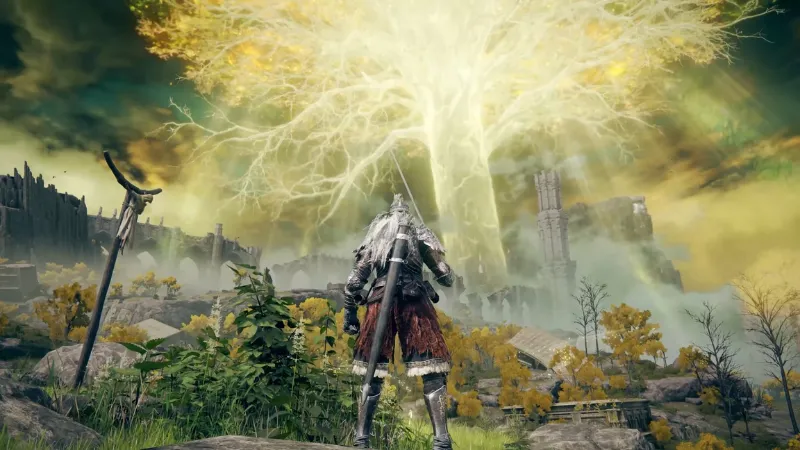
The Legacy of Friction: From Demon’s Souls to the Open World
To understand the specific struggle within Elden Ring, one must first acknowledge the lineage of Soulsborne titles. For years, Hidetaka Miyazaki’s design relied on the bottleneck method. Players were funneled into specific encounters that acted as skill checks; you either learned the parry timing of a Black Knight or you simply didn't progress. This created a sense of shared trauma and triumph among a relatively small community of enthusiasts who wore their frustration as a badge of honor.
With the transition to an open world, that bottleneck was shattered. Elden Ring replaced the Wall with the Detour. For the first time, players weren't forced to smash their heads against a boss for five hours. They could simply turn around, pick some flowers in Limgrave, and come back twenty levels higher. This shift fundamentally changed the nature of difficulty, moving it away from pure mechanical execution and toward a test of the player’s willingness to explore and utilize the tools provided by the environment.
The psychology of this change led to a divide. As the barrier to entry lowered, a vocal segment of the veteran fanbase felt a sense of prestige loss. The traditional Git Gud mantra became harder to enforce when a player could summon a Mimic Tear to solo a boss. This created a rift in the community: those who viewed the game as a curated challenge of skill, and those who saw it as a sandbox of power fantasies.
The Spirit Ashes Controversy: Automation vs. Agency
Perhaps no mechanic in Elden Ring is as divisive as the Spirit Ashes. By allowing players to summon ghostly AI companions, FromSoftware effectively implemented a dynamic difficulty slider within the game world itself. While this was hailed as a brilliant move for accessibility, it sparked a deep philosophical debate about whether beating the game with summons constituted the true intended experience of the developers or merely a shortcut.
Critically, the AI of many bosses in Elden Ring—such as Malenia or Maliketh—feels designed for one-on-one combat. When a Spirit Ash is introduced, the boss's tracking often breaks, and the rhythmic dance of combat is replaced by a chaotic scramble. This leads to a specific issue: the game feels significantly too hard for the average solo player, but arguably too easy for a player using a +10 Mimic Tear. The middle ground—the balanced, challenging-but-fair solo encounter—became harder to find for many.
This automated assistance also creates a disconnect in learning. In previous games, you had to internalize a boss's moveset to survive. With Spirit Ashes, you can often "stagger-lock" a boss into oblivion without ever seeing half of their attacks. While this enables more people to reach the credits, it dilutes the core Souls experience of growth through failure, replacing it with a strategic choice that some feel removes the "soul" from the combat.
The Scaling Problem: Late-Game Damage Spikes
As players move from the lush fields of Limgrave into the frozen wastes of the Mountaintops of the Giants, a jarring shift occurs. The mathematical scaling of enemies takes a sharp, vertical turn. In previous Souls games, the difficulty curve was a steady incline; in Elden Ring, it feels like a staircase that suddenly turns into a wall. This is where the game’s specific issue becomes most apparent: the balance between player HP and enemy damage output.
By the endgame, even players who have invested heavily in the Vigor stat can find themselves one-shot by basic mob attacks or boss combos. This forces a very specific meta-game where certain defensive buffs and talismans become mandatory rather than optional. The result is a narrowing of viable builds in the final third of the game, contradicting the play your way promise of the opening hours. It creates a frustration not born of lack of skill, but of perceived mathematical unfairness.
Furthermore, this scaling impacts the rewards system. In an open world, exploration is driven by the promise of meaningful power. However, when enemies scale so aggressively that a legendary sword feels like a butter knife, the incentive to explore optional dungeons begins to wane. Players often find themselves rushing to the end simply to avoid the slog of fighting over-tuned enemies that offer little tactical satisfaction.
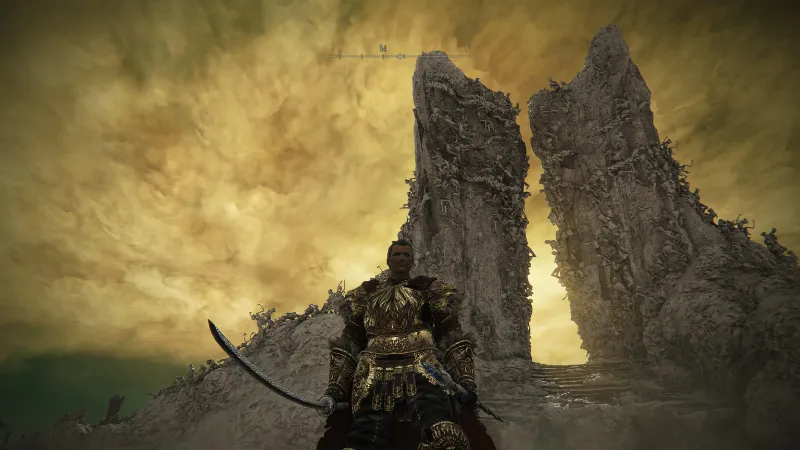
Fragmented Narrative: The Cost of Total Freedom
The marriage of George R.R. Martin’s world-building and Miyazaki’s cryptic storytelling is a masterpiece of environmental narrative, but it suffers under the weight of the game's scale. In a linear game like Bloodborne, the story beats are tightly paced. In Elden Ring, a player might find a key lore item in hour 5 and not find the second half of that story until hour 80. The issue here is the dilution of narrative impact through sheer distance.
This fragmentation often leads to players feeling disconnected from the stakes of the world. Why are we burning the Erdtree? Who is Miquella? For many, these questions remain unanswered not because the information isn't there, but because the delivery system is incompatible with a 100-hour open-world format. The emotional resonance of the ending often fails to land because the player has spent the last 40 hours distracted by side-dungeons that have little to do with the main arc.
To mitigate this, players are often forced to engage in lore-hunting outside of the game. While the community aspect of "solving" the story is a hallmark of FromSoftware, the sheer breadth of Elden Ring makes it feel less like a mystery and more like a puzzle with missing pieces. The freedom to go anywhere means the story has no rhythm, making the grand climax feel like just another boss fight in a long list of encounters.
The Yellow Paint Problem: Guidance in a Lawless Land
Modern game design often uses yellow paint or explicit waypoints to guide players. Elden Ring famously rejected this, opting for the Guidance of Grace—subtle golden trails visible only at rest points. While artistically brave, this created a specific technical and experiential hurdle. Players frequently found themselves lost in ways that weren't productive, missing entire legacy dungeons because they missed a single, obscure NPC interaction or a hidden path.
This led to the Wiki-Dependency phenomenon. To experience the full depth of the game, most players found it necessary to keep a browser tab open at all times. This breaks the immersion that FromSoftware worked so hard to build. The tension between wanting a pure blind experience and the reality of missing 40% of the content is a persistent friction point for the average user. It suggests that the game's world might be too large for its own minimalist guidance system.
Without a quest log or a more robust tracking system, the game inadvertently punishes players who take breaks. Coming back to Elden Ring after a week away often results in a "where was I going?" crisis. While the lack of hand-holding is refreshing, the scale of the game demands a slightly more cohesive way to track personal progress without turning the screen into a mess of icons.
Boss Design and the Infinite Combo Syndrome
One of the most technical criticisms of Elden Ring involves the evolution of boss AI. To challenge players who now have more tools than ever, FromSoftware designed bosses with input reading and infinite combos. Bosses like Morgott or the Elden Beast have attack strings that can last upwards of 20 seconds, leaving the player with a turn that lasts for a single half-second window.
This has led to a shift in combat philosophy:
- Reaction vs. Memory: Combat has moved away from reacting to animations and toward memorizing specific, non-intuitive delay timings.
- Stance Breaking: The game heavily incentivizes Stance Breaking through heavy attacks, making faster, light-weapon builds feel statistically inferior.
- AOE Spam: Late-game bosses rely heavily on massive Area of Effect attacks to punish players for positioning that was previously considered safe.
The result is a combat loop that can feel more like a trial-and-error memory test than a test of reflex. When a boss can track your movement perfectly and cancel their recovery to start a new attack string, the "fairness" of the encounter is brought into question. It forces a defensive playstyle that can feel passive and unrewarding for those who enjoy the aggressive pacing of previous titles.
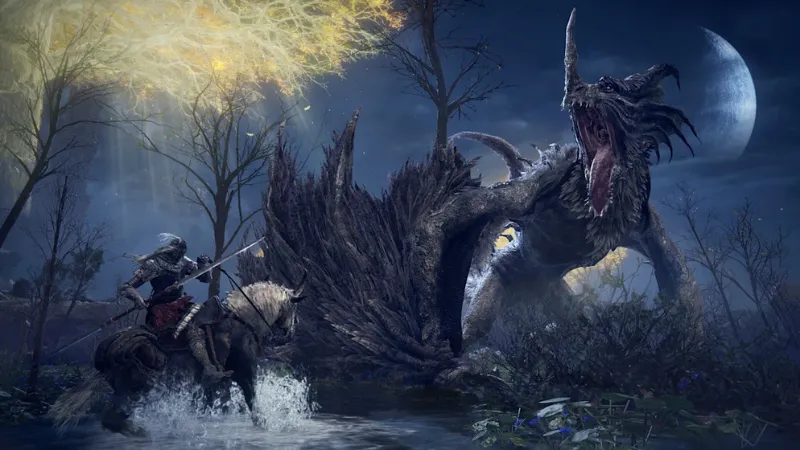
The Multiplayer Paradox: Co-op and Invasions
The multiplayer system in Elden Ring is a relic of 2009's Demon's Souls, and it feels increasingly out of place in an open-world setting. The inability to ride your horse while a friend is in your world makes traversing the massive map a chore. Furthermore, the invasion system—which only triggers if a player is already in co-op—ensures that invaders are almost always facing a 2v1 or 3v1 disadvantage.
This has created a toxic ecosystem where meta-gaming is the only way to survive. Because the odds are so stacked, both hosts and invaders rely on one-shot builds and exploits. The honorable duel of previous games has been replaced by a chaotic, often frustrating arms race that many players choose to avoid entirely by playing offline. The friction between the open-world freedom and the restrictive multiplayer rules creates a disjointed social experience.
Furthermore, the lack of dedicated servers means that lag and latency often determine the outcome of a fight more than skill. In a world this large, seeing a phantom skip across the screen during a crucial invasion is immersion-breaking and mechanically punishing. The system needs a ground-up rework to match the ambitions of the game's world.
Platform Parity and Technical Stutter
Historically, FromSoftware has struggled with technical optimization, and Elden Ring was no exception. Even years after launch, Shader Compilation Stutter on PC and frame drops on consoles continue to plague the experience. In a game where a single frame can be the difference between a successful dodge and a "YOU DIED" screen, technical inconsistency becomes a core gameplay issue.
This is particularly egregious in the Shadow of the Erdtree DLC areas, where the verticality and dense particle effects push even high-end hardware to its limits. The community's acceptance of these flaws—often dismissed as "part of the charm"—is a fascinating study in how brand loyalty can overshadow objective technical shortcomings. For a game that demands perfection from the player, it often fails to provide a perfect technical environment in which to perform.
The discrepancy between the artistic beauty of the world and its technical execution is jarring. Exploring a breathtaking vista only to have the frame rate dip to 40 FPS kills the sense of wonder. While the art direction is peerless, the engine's inability to keep up with the scope of the world remains one of the game's most significant "bosses" to overcome.
Accessibility vs. Difficulty: The Final Frontier
The conversation around an Easy Mode reached a fever pitch with Elden Ring. The game’s specific issue isn't that it lacks an easy mode, but that it lacks granularity. There are no options to increase font size significantly, no toggles for colorblindness that meet modern standards, and no ways to rebind keys that accommodate all physical disabilities.
By conflating Difficulty (the intentional challenge of the game) with Accessibility (the ability for a player to actually see and interact with the UI), the discourse often misses the point. Elden Ring proves that you can have a hard game that is accessible, but it currently sits in a space where its vision sometimes acts as a barrier to those who simply want to participate in the culture it created.
True accessibility doesn't mean making the bosses hit less hard; it means ensuring every player has the tools to see the boss clearly and input their commands reliably. FromSoftware's rigid adherence to a specific UI style has left many players behind, not because they weren't "good enough," but because the game didn't provide the basic accommodations that are now standard in the AAA industry.
Conclusion: A Masterpiece in Conflict
Elden Ring is a monumental achievement that successfully brought the masocore genre to the masses. However, its success highlights the specific issue of identity: it is a game trying to be two things at once. It is a punishing, elite action game and a welcoming, expansive adventure. These two identities often clash, resulting in uneven boss balance, technical hiccups, and a community divided by how the game should be played.
Ultimately, the friction is the point. FromSoftware games are about overcoming obstacles that seem insurmountable. Whether those obstacles are a boss's HP bar or the game's own obtuse systems, the satisfaction comes from the struggle. Elden Ring isn't a perfect game, but its flaws are as much a part of its DNA as its triumphs, serving as a reminder that true art often requires a bit of discomfort.
The Lands Between will remain a subject of study for years to come. Its success has proven that players are hungry for challenge and mystery, even if it comes with a side of frustration. As the developer moves forward, the lessons learned from Elden Ring’s internal tug-of-war will likely shape the next generation of action RPGs, hopefully finding a way to balance that uncompromising vision with the realities of a global, diverse audience.
The article explores Elden Ring's internal conflict between accessibility and traditional difficulty, analyzing boss AI, scaling, and the impact of its open world.