 html5funzone.com
How to Master Two-Player Synchronization, Balance Physics, and Obstacle Courses in Carry The Glass
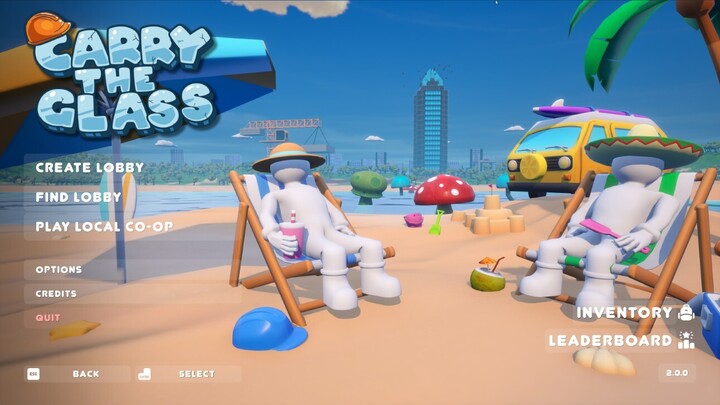
Cooperative physics games are the ultimate test of friendship, and Carry The Glass turns that test into a fragile, high-tension gauntlet. Designed around a deceptively simple premise, the game tasks two players with transporting an oversized, hyper-fragile pane of glass from the starting dock to a designated delivery zone across increasingly absurd obstacle courses. Unlike solo platformers where a missed jump only costs you a few seconds, every misstep, desynchronized jump, or sharp angle shift in Carry The Glass transfers structural stress directly into the glass pane—shattering your progress into thousands of sparkling pieces and sending both players straight back to the previous checkpoint.
Succeeding in this physics-driven co-op challenge requires far more than holding down the forward key and hoping for the best. Moving past early warehouse levels into chaotic construction sites, moving conveyor belts, and high-altitude catwalks demands strict role delegation, synchronized movement cadence, verbal countdowns, and a deep understanding of tension mechanics. Whether you are playing via local couch co-op or online multiplayer, this comprehensive step-by-step operational guide covers every movement principle, communication protocol, environmental hazard, and recovery tactic required to deliver the glass intact.
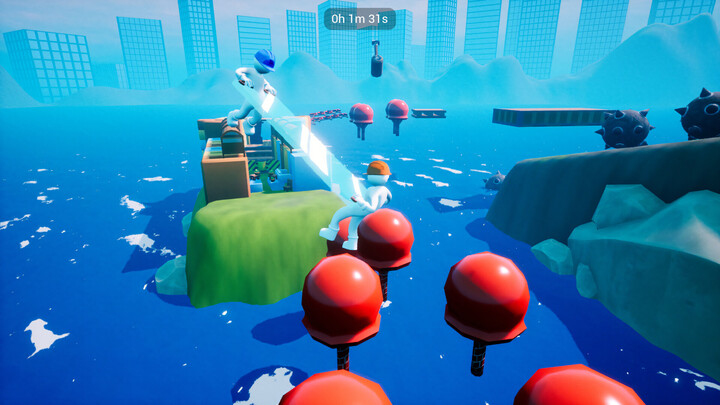
1. How to Master Dual-Player Physics, Tension Limits, and Grip Mechanics
The foundational mechanic governing Carry The Glass is shared physical tension. Both players hold opposite ends of a single rigid glass panel, which acts as a physical bridge connecting your two character hitboxes. Because the glass has fixed dimensions and low structural tolerance, walking too far apart stretches the pane past its breaking point, while walking too close together compresses the panel and forces it to buckle and shatter.
Maintaining structural integrity requires locking into a consistent spacing distance before taking your first step. Once both players grab their respective handles, watch the visual stress indicators along the edges of the glass—subtle white crackle lines or reddening edges signal immediate danger. If you see stress lines forming, both players must halt horizontal movement immediately and micro-adjust their spacing until the glass returns to a clear, neutral state.
Core Grip and Tension Rules
- Never Sprint Independently: Triggering a sprint input without your partner matching your velocity instantly snaps the glass via tensile overload.
- Respect Vertical Elevation Limits: Climbing stairs or ramps creates steep pitch angles; the upper player must slow down so the lower player can match the incline smoothly.
- Release Only on Flat Ground: Dropping your grip while the glass is tilted or resting on an uneven edge causes it to tip over and shatter on impact.
2. How to Establish Role Delegation and Verbal Countdown Protocols
Because two brains are controlling a single fragile object, uncoordinated improvisation is the primary cause of early failures. Before tackling complex obstacle sequences, establish clear operational roles: designate one player as the Lead Navigator (Front) and the second player as the Anchor Stabilizer (Rear).
The Lead Navigator controls overall pacing, reads upcoming obstacles, and initiates all verbal countdowns. The Anchor Stabilizer focuses entirely on matching the Lead Navigator's speed, maintaining rear spacing, and calling out trailing hazards that fall outside the front player's camera view. Using a strict three-beat countdown ("Three, two, one, jump") eliminates input latency discrepancies and ensures both characters leave the ground on the exact same frame.
Standardized Co-Op Callout Framework
- "Hold / Freeze": Immediate full stop command used when stress lines appear or a moving hazard enters the path.
- "Slow Creep": Switches both players from standard walking speed to micro-step inputs for narrow beams and ledges.
- "Three, Two, One, Hop": Mandatory synchronized countdown used prior to every gap jump, conveyor transition, or step-up.
3. How to Configure Camera Angles, Sensitivity, and Display Settings
Default camera angles in third-person co-op games often obscure narrow ledges, trailing obstacles, or the exact spacing between your character and the glass pane. Optimizing your visual and control settings before starting a stage gives both players superior spatial awareness.
Set your camera distance to maximum zoom-out so you can clearly see both characters, the full length of the glass pane, and the platform directly ahead. Lower your camera rotation sensitivity slightly to prevent accidental mouse or stick flicks from whipping your character sideways and twisting the glass violently. Additionally, enabling clear visual outlines or high-contrast stress indicators ensures you never miss early warning cracks in brightly lit outdoor levels.
4. How to Navigate Narrow Beams, Catwalks, and Precision Ledges
Early warehouse levels quickly introduce narrow wooden planks, steel I-beams, and elevated catwalks with zero guardrails. Traversing narrow walkways requires shifting from simultaneous side-by-side walking to a strict Single-File Tandem Formation.
Before stepping onto a narrow beam, come to a complete stop at the entrance and pivot the glass lengthwise so both players are aligned directly along the center axis of the walkway. Walk forward using short, rhythmic taps rather than holding down the movement stick continuously. If one player drifts slightly off-center, do not attempt a sharp sideways correction; instead, stop completely and use tiny diagonal micro-steps to re-center on the beam.
Narrow Walkway Survival Checklist
- Align Before Stepping: Never enter a narrow plank at an angle; square up both characters with the center line first.
- Lock Camera Straight: Keep your camera aligned directly down the length of the beam to judge left-right drift accurately.
- Use Tap Movement: Tap your forward movement input in short pulses to prevent sliding off slick metallic catwalks.
5. How to Execute Synchronized Gap Jumps and Elevation Drops
Jumping while carrying a rigid glass pane introduces complex mid-air physics. If Player A jumps a fraction of a second before Player B, the glass tilts upward, catches air resistance, and pulls Player B off their feet—resulting in an immediate mid-air shatter or an off-balance landing.
To execute clean gap jumps, approach the edge of the platform together and halt approximately one character-length back from the drop-off. Confirm that both players are standing on level ground with zero tension stress on the glass. The Lead Navigator initiates a clear verbal countdown, and both players press their jump and forward inputs simultaneously. Upon landing, resist the urge to keep running; pause for half a second to let the landing suspension settle before moving forward.
Elevation Drop Execution Steps
- Square Up at the Ledge: Stop together at the edge of a drop-off so both players fall at the exact same moment.
- Release Directional Inputs Mid-Fall: Let gravity pull both players straight down evenly rather than pushing forward unevenly in mid-air.
- Absorb Impact Together: Touch down simultaneously on the lower platform and wait for the glass bounce animation to settle before resuming movement.
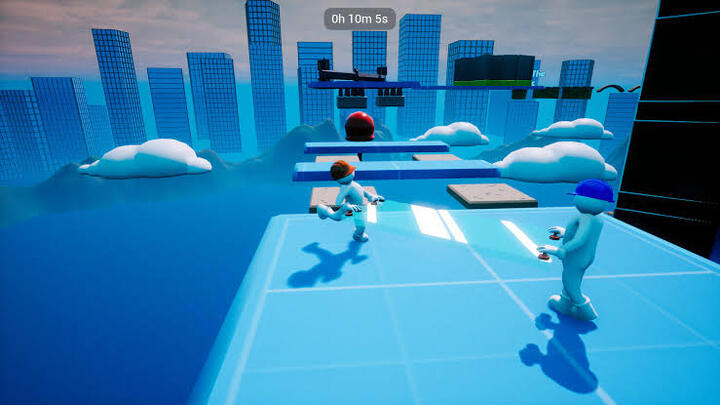
6. How to Handle Moving Platforms, Conveyor Belts, and Swinging Hazards
Mid-game stages escalate the difficulty by introducing dynamic environmental hazards, including automated factory conveyor belts, oscillating platforms, pneumatic pistons, and swinging wrecking balls. Dynamic obstacles punish hesitation; stepping onto a moving belt one player at a time immediately tears the glass apart.
"Against static obstacles, patience is your greatest weapon; against moving machinery, hesitation is fatal—commit together on a single beat or wait for the next cycle."
When boarding a moving platform or conveyor belt, position both players side-by-side perpendicular to the edge so both characters step onto the moving surface at the exact same instant. For swinging pendulums or timed pistons, observe two full obstacle cycles before moving. Identify the widest safe window, count down the exact second the hazard begins retracting, and move briskly across the danger zone as a single synchronized unit.
Dynamic Hazard Counter-Strategies
Hazard ArchetypePrimary ThreatRecommended Co-Op TacticConveyor BeltsAsymmetric lateral drag forcesBoard side-by-side simultaneously; walk slightly against fast belts to maintain control.Oscillating PlatformsVertical pitch shear during boardingJump onto the platform at the exact apex when vertical motion pauses briefly.Swinging PendulumsInstant physical impact shatterWait for the pendulum to pass center, count down immediately, and sprint across together.Slippery Oil / Ice FloorsUncontrolled inertia slideReduce movement to micro-taps; use reverse inputs early to brake before edges.
7. How to Traverse Stairs, Steep Ramps, and Spiral Ascents
Vertical climbs—such as construction scaffolding ramps, warehouse staircases, and spiral towers—introduce continuous pitch angles that test vertical spacing tolerance. Because the glass pane cannot bend, steep inclines force the higher player to raise their arms while the lower player crouches slightly to keep the panel aligned.
When climbing stairs or steep ramps, the Lead Navigator must reduce walking speed by roughly 30%. Moving at full speed up a staircase causes the front player to climb faster than the rear player can follow, stretching the glass diagonally until it snaps. On spiral staircases, the player on the outside curve must take wider, slightly faster steps than the player hugging the inner railing to maintain parallel alignment around the bend.
8. How to Utilize Rest Zones, Checkpoints, and Safe Placement Spots
Long, grueling levels are divided into segments separated by designated Checkpoint Pads and flat Rest Zones. Triggering a checkpoint locks in your progress, ensuring that any subsequent shatter respawns your team at that marker rather than the beginning of the entire stage.
Never rush past an active checkpoint while the glass is under tension or tilted at an awkward angle. Step fully onto the checkpoint platform, bring both characters to a complete halt on flat ground, and wait for the audio chime and visual confirmation flare before moving toward the next obstacle. If your hands are fatigued during a tough section, look for wide, flat floor areas where you can safely set the glass down flat to reset your grip and plan the next sequence.
Safe Glass Placement Protocol
- Locate Flat Terrain: Ensure the floor beneath the entire length of the glass is completely level with no small debris or curbs.
- Halt All Momentum: Come to a zero-velocity standstill before pressing the release/drop button.
- Synchronized Drop: Count down together so both ends of the glass touch the ground simultaneously without tipping.
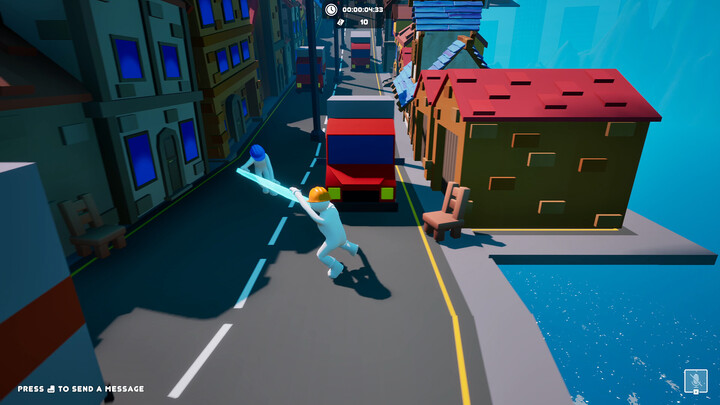
9. How to Recover From Near-Shatter Moments and Slip-Ups
Even the most disciplined duos will occasionally misjudge a jump, bump a corner railing, or step onto an unexpected patch of ice. Knowing how to execute an Emergency Stabilization Recovery when the glass starts cracking can save your team from losing ten minutes of careful progress.
The exact second you hear the high-pitched glass creaking sound or see red stress indicators flash, both players must immediately take their thumbs off the movement sticks. Panicking and trying to run through a bad angle always results in an instant shatter. Once stopped, communicate which way the glass is pulling—if the pane is stretched tight, both players take one tiny step inward toward each other; if it is compressed, take one tiny step outward until the warning sound stops.
10. How to Complete the Final Delivery Zone and Master Speedrun Challenges
Reaching the final delivery dock at the end of a level is often where overconfident teams suffer their most heartbreaking failures. Celebration sprints or sloppy final jumps onto the delivery truck ramp can shatter the glass mere inches from the finish line.
Maintain your disciplined countdown protocol all the way until the stage completion screen triggers. Walk steadily up the final delivery ramp, keep the glass centered over the glowing target zone, and come to a full stop before setting the pane down onto the delivery rack. Once you have mastered clean deliveries, you can revisit earlier levels to tackle Speedrun Medals and Zero-Stress Runs, chaining fluid synchronized jumps together without stopping to set new personal record times.
Conclusion: Turning Fragile Chaos Into Seamless Teamwork
Mastering Carry The Glass is a uniquely rewarding journey that transforms simple movement mechanics into an intense exercise in trust, patience, and communication. By stripping away complex combat systems and focusing entirely on shared physics and fragile cargo, the game creates unforgettable cooperative tension where every successful jump feels like a major triumph. Victory never comes from individual skill alone—it comes from listening to your partner, respecting tension physics, and moving as a single coordinated unit.
As you step into the next stage with your co-op partner, remember that every shattered pane teaches you something valuable about pacing, spacing, and obstacle timing. Keep your callouts clear, trust your countdowns, stay calm when the glass begins to creak, and deliver every pane safely to the finish line.
Master tension physics, synchronized countdowns, narrow beams, and hazard timing to deliver fragile glass intact with your partner in Carry The Glass.